


Click on triangle below to start listening –AND– scroll down to read the transcript
“Deaf and rejected, Luczak longs for visibility among those who erase him: class bullies, teachers, and even his mother, who goes to the grave unable to accept her gay son. I found myself rereading Ironhood, wanting to savor his writing.”
— Beverly Matherne, author of Potions d’amour, thés, incantations / Love Potions, Teas, Incantations
Sponsored by Modern History Press, Moravian Sons Distillery, author Terri Martin and Doc Chavent
In Ironhood, the acclaimed poet Raymond Luczak recalls the neighbors and shopkeepers he once knew while growing up in Ironwood, Michigan during the 1970s and 1980s. They included a scruffy man who smoked cheap cigars while tending to his fragrant backyard garden, a cat-eyed woman who stood watch over a sea of typewriters, a bald jeweler whose dexterous fingers repaired a watch’s minuscule innards, and tired cashiers in red smocks who dreamed at the western edge of town.
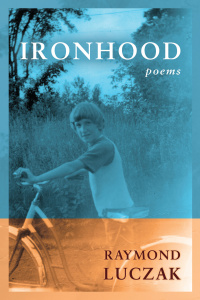 The following transcript of Raymond Luczak’s interview has been streamlined and edited for clarity.
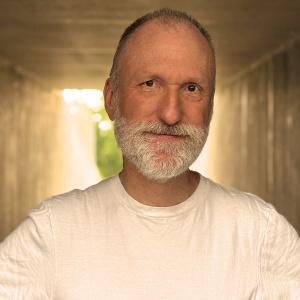
Emma Palova: Hello everyone. Welcome to the For the Love of Books podcast featuring indie and small press authors with host author Emma Palova. I would like to thank our sponsors Modern History Press, Moravian Sons distillery author Terry Martin, and Doc Chauvin. Today I will be chatting with author Raymond Luczak and an ASL interpreter Adam Bartley, who will announce the details of his book giveaway of Ironhood at the end of the interview. Raymond Luczak is the author and editor of 38 books, including Ironhood: Poems (Modern History Press), Animals Out There Wild: A Bestiary in English and ASL Gloss (Unbound Edition Press), and Compassion, Michigan: The Ironwood Stories (Modern History Press). His work has appeared in Poetry, Prairie Schooner, and elsewhere. An inaugural Zoeglossia Poetry Fellow, he lives in Minneapolis, Minnesota. Hello Raymond, how are you today?
Raymond Luczak: Oh, hello everyone. Thank you so much for having me here today.
Emma: Okay, let me start us off with a quote from John Lee Clark, author of How to Communicate: “This book sees all, not everything, but all. There is a difference.” I can’t resist, but read one more review by Beverly Matherne, author of Potions d’amour. “Deaf and rejected, he longs for visibility among those who erase him, class bullies, teachers, and even his mother who goes to the grave unable to accept her gay son. I found myself rereading Ironhood, wanting to savor his writing.” Beautiful. Okay.
Raymond: Those are very kind words. I’m very touched. Thank you.
Emma: Okay. Raymond, can you give us a brief summary of Ironhood, which is a twist on Ironwood, where you actually grew up?
 Raymond: Let me explain a few things about that. First of all, the book was initially called Ironwoodia. Ironwoodia was its original title. When Modern History Press accepted the book for publication, they suggested that I check the Internet and see if it was already used on Amazon and I found that the word Ironwood was used as the name of a porn sex series. And so we said, Nope, not publishing it under that, we don’t want that. So we want to make the book easy to find though so that it wouldn’t be confused with that other audience. With that, I came up with the new title, which speaks to the state of mind in that which I think is much more acceptable and I don’t think it’s confusing the Ironwood with Ironhood. I think so in a way, I think part of the bigger picture that brings in here is what life in a small town is like in the Iron Range area. And that’s an area where historically there was a lot of iron mining. And in fact, my hometown, I would say, its boom years really peaked in the 1920s or 1930s with about 20 to 30,000 people at the time. And then after some time passed, one mine after another closed because the iron ores were depleted. Tlast mine closed in 1967, two years after I was born. So really I grew up with a sense of what that town was as a young boy growing up in a town that was obviously in decline, [I felt] things were still going along, but there was nothing compared to the time that had preceded that. This small town, for example, had an opera house at one time.
Emma: Oh, wow.
Raymond: Yeah. And there were two or three movie theaters at one time, and now it’s a town of less than 5,000 people. At any rate, my book talks about the people that I used to know there and just for example in my neighborhood, most of the houses there we could visit each other. [In those days] most neighbor’s houses weren’t locked; houses and cars were just left alone because everyone knew each other. I knew many of the people by name and a lot of the mom and pop shop owners. We knew those business owners by name in that small town, and all of those people that I used to know my neighbors.
Emma: What about that cat eye lady? Raymond? You mentioned a cat eye lady.
Raymond: I don’t know her name and I don’t actually know her name, but I do remember her and I remember those cat eyes staring intently being powered by that mean when you’re young and impression kid looking around the world and adults who have a great deal of power, something. I don’t really know what her story was, but I actually never got a chance to overhear what my siblings knew about these people, about these other people’s backgrounds. Because having grown up deaf, you didn’t get the sort of incidental conversation around. That’s something that’s important to understand is that if I need to understand, I would have to have somebody sit down in front of me and specifically tell me about it, so I can lipread them and figure it out as best I could analyze, so I can speak to the interactions I had with these people though.
Emma: Sure. And Raymond, what inspired you to write this off? Was there a specific moment that set you off to write it?
Raymond: This has been part of a series of books that I’ve written. The way I write my poetry: I have an idea or a concept or something that I want to explore. And then I’ll spend several months if I’m inspired by just getting it out there, vomited onto the page, just put out there what I can put out and then go through rewrites, reorganization. I’ll redo it, cut out the bad poetry, what works, what’s not working, and hone in on what’s there. And then if you look at several books before I started writing about my hometown, the first book there that really, my first book of poems in fact was some 30 years ago. It’s called Saint Michael’s Fall. Since then I hadn’t written specifically about my hometown again until some five years ago with a book called Once Upon a Twin. And that book is really about the stories that my mother told me. And I had three different contradicting stories to try to reconcile about her miscarriage. She said that there was a miscarriage that could possibly have been my twin. I never thought about it, but I started looking into this concept and wondering what would my life had looked like if I had a twin. Would my twin have been there to support me? Would they have been at a distance with me? Would they have interpreted for me? What was that like? Could that have been like, so that was sort of the dependencies of what that life as a twin could have been. And then the next book was called Far from Atlantis. Around the age of 11, I became obsessed with UFOs and Bigfoot and Loch Ness Monster and Wonder Woman, all those things during that period. And then time passed after that phase. I started noticing that I was writing about some of these people that I knew so I started putting the book together with different pieces. Then I showed it to Modern History Press and they took it, but it didn’t feel quite right. But once my mother passed away, then the book totally reorganized itself because she was the last person that I knew living there. All the other people in the book are dead, so she was the last one. So initially when I submitted the book to the publisher, it had ended with a poem called “One Day a Spaceship Will Land Right Here in Ironwood.” But when my mother died, I made that poem the first one in the book. And then everything reorganized itself with ending the book with my poem about my mother.
Emma: Yes, that’s the one I read and I was fascinated by it. I believe it’s called “Buttercups.” I was fascinated by that poem. That was great.
Raymond: Thank you. Oh, thank you. Thank you.
Emma: What was the biggest challenge in writing this book?
Raymond: Much of it was about the structure and the order. When my mother passed, I wrote that poem and I knew what to do. So going over that structure, knowing what to do then was the biggest hurdle. Sometimes the right poem to end the book and having that or the right one to begin, it can sort things quickly.
Emma: Okay. What was the most gratifying part?
Raymond: Finishing it!
Emma: That’s the best part. Okay. Any surprises, discoveries, or epiphanies while writing this book actually?
Raymond: One of the strange things was this person who’s not in this book. It’s actually published elsewhere, and it’s about a man whose name I thought was Ray Gust. There were only two deaf men in the city in my hometown—both different from each other. The first deaf man was a high school dropout who worked as a dishwasher at Holiday Inn, and the other deaf man [Ray Gust], I didn’t know what his job was. But we both had the same first name. I was looking for the years he’d lived and died, but I couldn’t find his name online. I was stymied. Then I learned that his name was not Ray at all! It wasn’t even his middle name. His first name was Francis. I don’t know why people called him Ray, but I had a hard time figuring that one out. One of the big challenges I had was finding people’s exact name for years. For example, for the poem called “The Watchdog,” I had to figure out what the man’s name was. People knew his name, but I had to confirm whether it was indeed him, the correct years, and his background. I knew he must’ve suffered from PTSD.
Emma: Sounds challenging. Raymond, what do you feel you did right? No one else could have done it like you
Raymond: I’m deaf. I was the only deaf child living in that town. Who else could tell that story?
Emma: Yes, yes. What would you have done differently?
Raymond: You mean my life or do you mean in my life or with that book?
Emma: In the book.
Raymond: Well, I would like to have remembered more of these people because sometimes, as I said, this is over 50 years ago. I wish I could remember more and taken more notice of these people, the names of the stores. There was one man in particular from my hometown who died four years ago, who knew everything about all the businesses that had been there in town and died. And I wish I could ask him, Hey, tell me about this store. Tell me about that place. Tell me about this person. I was small enough that I could walk through town by myself at seven or eight years old. It was no big deal to walk into the stores all by myself and mill around. Everybody knew who I was. Oh, the deaf kid. Everybody knew who I was.
Emma: Oh yeah, sure, sure. Small town. Right. Okay. Raymond, what have you learned about yourself from writing this book? This one, this book?
Raymond: Did I learn more about myself through writing this book, other books? It’s a good question. I mean, that’s been part of my journey with my other books as well. I didn’t think really long and hard about what it meant to live in a small town at that time. So with this book, I really explored that. I dug into my own experience and feeling there, what it was like to be a deaf person in that small town. The book became a process of looking back on the life I used to know; you could say that it’s an elegy of sorts to my childhood.
Emma: Oh yes, absolutely. That is awesome. What are some of the takeaways from the book?
Raymond: The point is not what you can’t remember. It’s important to appreciate what you can, which you can remember when you’re a kid, you don’t realize how awful some things are because you just think that’s the normal course of things when you’re a kid. But it’s so important also to appreciate the good things that you have. The book is really an elegy to who all these people had meant to me.
Emma: Yeah. Raymond, would you do it all over again? Your writing career, everything that you’ve done up so far in your life, would you do it again?
Raymond: No, not really. I didn’t know everything about the publishing world, the poetry business. “Po Biz,” if you will. It’s terribly important to publish your first book of poems with the right house, for example. I just didn’t know, I didn’t know a lot about the ins and out of the publishing world as a poet because the world of professional poetry, it’s just very different and very competitive. I didn’t think I would be able to publish 38 books so far.
Emma: That’s amazing.
Raymond: Starting off with the first two and then moving forward. I mean, wow. It’s fine. I’m not going to dwell on what could have been. I keep moving on.
Emma: Right. So what is the most interesting or bizarre thing that has ever happened to you during an in-person event? Author’s event? Something that you’ll never, ever forget.
Raymond: One time in Ohio, I was giving a reading in a bookstore. I was standing at a podium and there was a sea of chairs in front of me. So I’m signing away with the interpreter speaking in English. There was one man, a customer, I guess, who wandered in and completely ignored me by going to the bookshelves right behind me. So everybody’s eyes are distracted, what’s happening right now. That’s when I told the interpreter, Don’t say a word. We stayed silent for a minute. And then suddenly the man heard our silence, looked at all of us, realized what was happening, and left. I don’t know what he was thinking, but he just walked right behind me and starts browsing the shelves. This is back in 1995.
Emma: That’s incredible. So what is next on your writing journey?
Raymond: Well, I am having a new poetry collection coming out in March, February, sometime in the spring. It’s entitled [Exeunt.]. It’s a book of elegies for gay friends who have died of AIDS and other causes. If you think of Shakespeare in theater, for example, somebody would come on to stand onstage and then leave. Each poem is like that character who comes into the spotlight, speaks who they are, and they leave with each dead person spotlighted in turn. The title is actually a stage direction. I’ll be editing a new anthology for Modern History Press [we will announce details next month]. I’m always working on my next book.
Emma: Of course. We all have to keep on going. Just rolling. Okay. Would you like to read to us from Ironhood?
Raymond: I have selected the poem for this and a little bit of background about it first. The book is mostly story poems, so even if you don’t like poetry, there’s still a story there to be follow through. I have story about a neighbor who did a very strange thing. So I’ll let Adam read it. (I haven’t had time to translate it into ASL.)
Charles (“Chuck”) Lewinski
(1914–1987)
He had the gruffest face of anyone I saw.
He smiled not even once
while we kids were laughing
down the street from his house.Wearing a dull olive uniform,
he worked as a janitor at Luther L.
where a nursing home next door faced
two funeral homes right across the street.One summer evening he lay face down
in the yard outside his living room window.
His arms stayed flat against his body.
He kept his scissors legs shut
with his face planted right in the grass.He did not move for what seemed a long time.
Mosquitoes buzzed around me.
I watched him from the driveway
of our three-stall garage next door.What if he had died? Didn’t his wife know
what he was doing right this very minute?
I finally said, “Hey, Mr. Lewinski, you okay?”He turned his head and looked up pissed at me.
His face was not marked by green stains.
He pushed himself off the grass
and turned around and walked
to the back door of his yellow house.Not even a word of apology.
When he died, I thought of how
he wouldn’t like resting face up
in his coffin when he was buried.
Emma: Very great. I really enjoyed that.
Raymond: I told my mother about what happened. My mother thought it was so strange too. Sjhe was really puzzled.
Emma: Now the details, Raymond of your book giveaway of Ironhood.
Raymond: I’m happy to give an autographed copy of the book to the first person who emails me with “podcast book giveaway” in the subject field to this email address (which I’ll repeat twice just to be sure): yooperpoetry@gmail.com. That’s yooperpoetry@gmail.com. I’ll respond and you can give me your snail mail address and I’ll send it off to you.
Emma: Excellent. And now parting shots from each one of us. You first, Raymond, you are my guest. What would you like to leave our listeners with?
Raymond: Please be open to new work by people. I think in America some people feel limited by just bestsellers, like the New York Times bestseller list. I don’t know if I would say I’m famous, perhaps somewhat in the deaf community—but I do very much appreciate it when people like you to help promote books and works that could easily be overlooked within mainstream media. I very much appreciate that. And I just want to ask people to be open.
Emma: Yes. And I’m Emma, and I’m definitely honored to have you on my podcast. And my parting shots are Write Indie, Buy Indie, and Read Indie. Read your local newspapers for inspiration. Keep your fingers on the keyboard and your butt in the chair. Thank you for listening. Goodbye. Goodbye.
Raymond: Thank you. Thank you so much. Thank you for having me.