Click on the “triangle” below to playback the audio interview with Terri Martin!
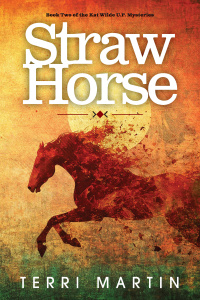 Straw Horse is the second novel in the Kat Wilde Mystery Series. It follows Kat, a practical but vulnerable woman who has inherited a defunct horse stable and is trying to turn it into a viable, life-giving business in Michigan’s Upper Peninsula. Equal parts cozy mystery, character study, and gentle romance, Straw Horse balances murder and mayhem with everyday humor and the plainspoken rhythms of small-town life. The book earned a 2026 UP Notable Book Award and builds on the momentum of Gift Horse, the first book in the series.
“Writing has always been a persistent call throughout my life.”
Where Straw Horse fits in the Kat Wilde series
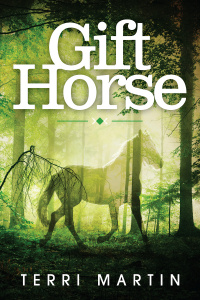 Gift Horse introduces Kat and the unlikely premise: a defunct stable left to her family becomes her chance to reclaim independence. Straw Horse picks up after Kat has made progress transforming the stable. She still works at her father’s accounting office, but now she also manages rescue horses, teaches riding lessons, and helps develop a special-needs horse therapy camp. Those initiatives add heart and practical stakes, while a series of mysterious deaths and a forgotten homestead on the property pull Kat into a dangerous investigation.
The book mixes three strands: the central mystery, a slow-burn romance with a DNR conservation officer named Nikko, and a healthy dose of character-driven humor. Each thread advances the series while leaving room for more revelations in later books.
From thesis story to a mystery series
 The roots of Terri Martin’s mystery writing reach back to a master’s thesis she wrote while pursuing a creative writing degree later in life. Her thesis, originally titled Choir Practice and later Moose Willow Mystery, grew from a piece she set aside and returned to years later. Dusting off older work, updating outdated details, and reworking scenes can be a fruitful path to a fresh series.
Martin’s academic experience shows that it’s never too late to deepen craft: she completed a Master of Fine Arts in English creative writing after age 60, embraced her professors and classmates, and used that period to develop discipline and storytelling instincts that now serve her ongoing series work.
Horses and the Upper Peninsula as a living setting
Horses are not just backdrop in the Kat Wilde books. They inform the plot, the business challenges Kat faces, and many of the book’s emotional beats. Martin draws on decades of experience—riding since age five, owning her first horse at 14, fox hunting, showing, boarding, and teaching—to keep equine behavior and stable life authentic. Accuracy matters to readers, particularly when animals are involved, and it can also provide a distinct hook for a mystery series.
The Upper Peninsula is written as more than scenery. Its isolation, weather extremes, and local culture create both obstacles and narrative opportunities: strange items found on rural properties, quirky local characters, and an atmosphere where small mysteries can widen into real danger.
Characters, tone, and the author’s voice
Kat is designed to be believable rather than extraordinary. She has vulnerabilities, family tensions, and a tendency to get in over her head. Supporting characters include a somewhat eccentric, young-at-heart aunt with purple hair, a steady ranch hand, volunteers who help with rescue horses, and Nikko, whose professional competence and personal reticence create romantic friction.
Martin emphasizes humor as an aesthetic choice. Rather than leaning fully into gore and grimness, Straw Horse threads levity through tense material. The result is a mystery that respects reader intelligence while offering warmth and wry observations about life in a small town.
Craft: the hardest parts and the best rewards
Plot management is often the most difficult element. Juggling multiple subplots, keeping suspects credible, and timing reveals to maintain suspense require constant revision. Early drafts can feel exhilarating, then brittle as complexity grows. Feedback from trusted readers and careful proofreading are essential, even when edits are painful.
On the rewards side, Martin praises control over the creative process, especially when working with small presses. She celebrates the satisfying moment of holding a finished book and the creative collaboration over cover design. A memorable cover, she says, can make a huge difference.
Lessons learned and practical advice for writers
- Follow the persistent call. If writing keeps pulling at you, make space for it—even later in life.
- Build authenticity from experience. Use real-life knowledge—such as horse care—to add credibility and depth.
- Plan ahead for a series. Think beyond a single book so unresolved threads become intentional hooks rather than accidental baggage.
- Accept ruthless editing. Favorite passages might need to go if they harm pacing or clarity.
- Maintain daily discipline. Small, steady progress—chapter by chapter—beats bursts followed by long gaps.
Short excerpt
“The vehicle, a Volkswagen camper, was tricked out with psychedelic retro-heavy decor, including rainbows, flowers, and paisley swirls. Strange appendages sprouted from the roof. No wonder the damn thing quit, Nikko said. VW hasn’t made this style of camper for decades.”
Final thought
Straw Horse is aimed at readers who want a mystery that combines small-town charm, relatable characters, and authentic equine detail with a dash of humor. For writers, the book is a case study in turning life experience into craft, embracing discipline late in life, and learning to plot a long-form series while keeping the voice personal and true.
Make time to read. If writing calls you, make time to write. Keep your fingers on the keyboard and your butt in the chair.